LA FAGIANA
PARCO DEL TICINO
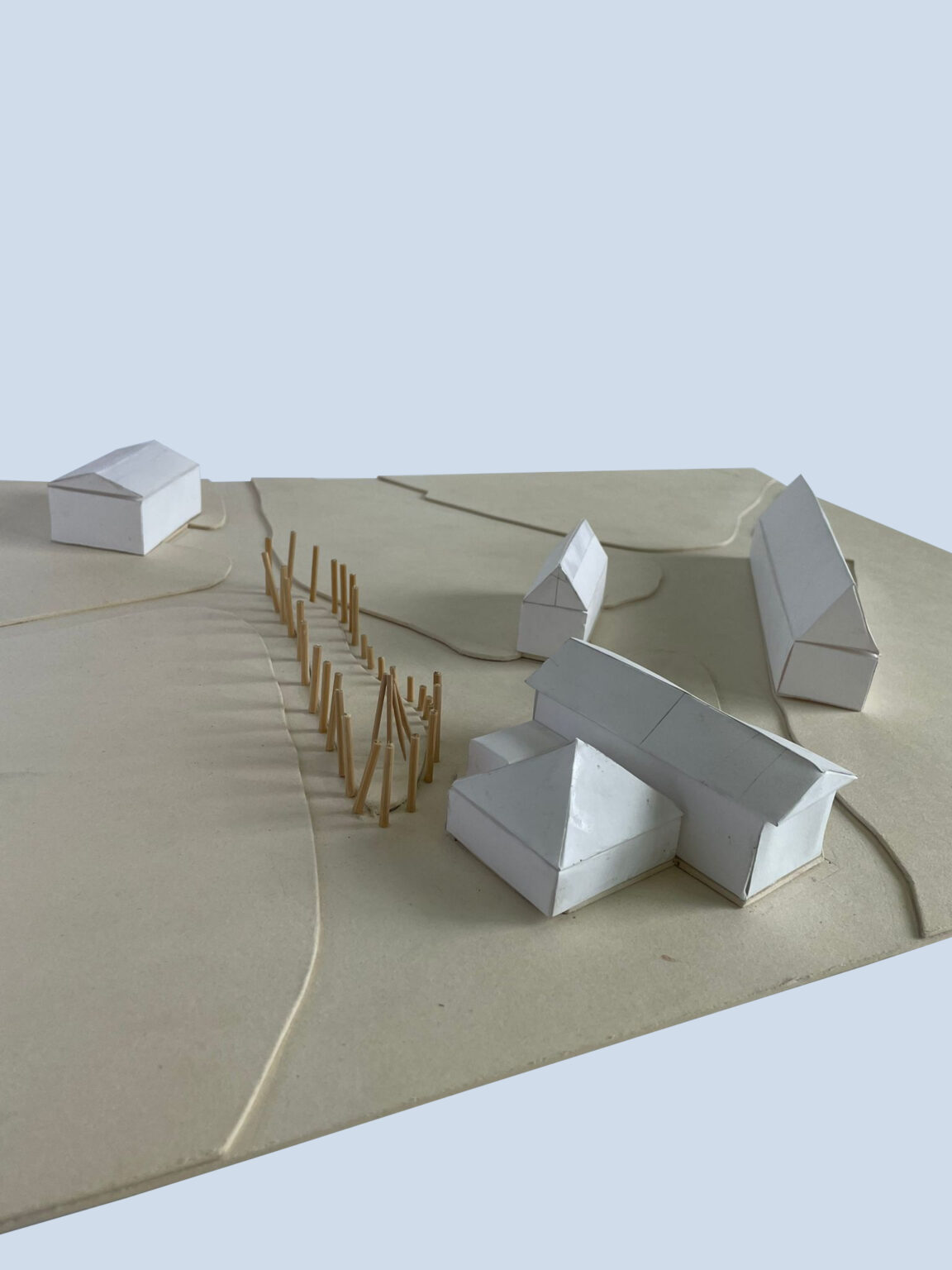
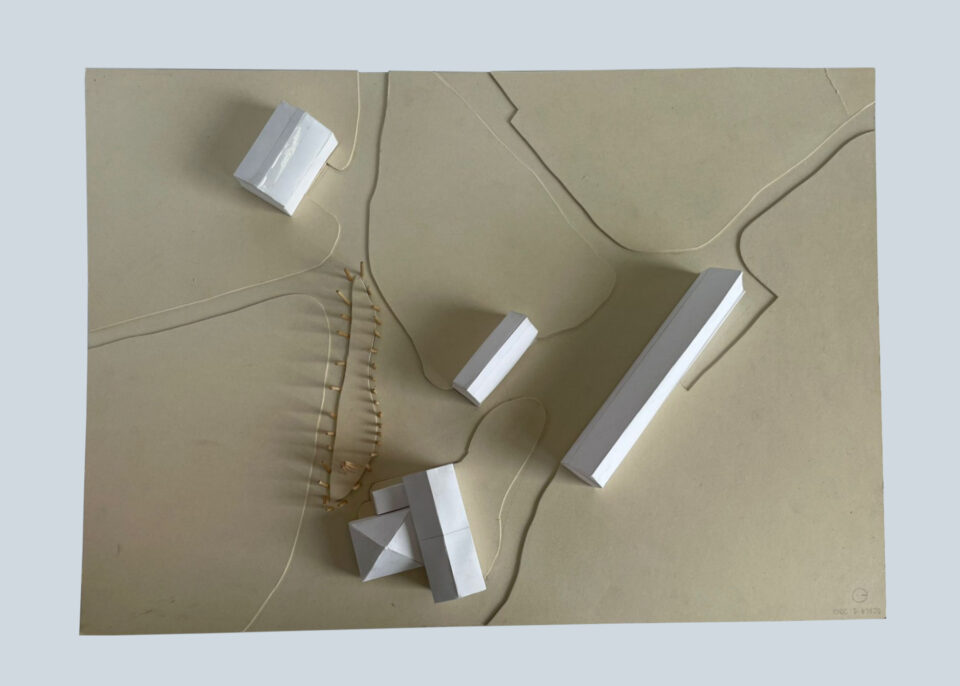
In the last 3 years, as far as alternation is concerned, I and my class have taken care of the Pheasant, an information point within the Ticino Park. Our task was to modernize the spaces of the Ticino Park and the Pheasant. In addition, we have designed four installations to be included in the park: one outside and three inside the Pheasant building.
In 1990 the First Park Centre was inaugurated, the place that most identifies the Park of Ticino and is located in the Oriented Naturalistic Zone: The Pheasant. It is the headquarters of most of the operational activities of the Agency, as well as the most equipped area to receive tourists. The estate today covers almost 500 hectares of forest areas, meadows, oxbows and wetlands: it is entirely included in the area near the river created by the floods of Ticino and is the most important public natural area of the Ticino Valley.
At the center of the museum you can find: an information point, a conference room/ classroom, a laboratory/ classroom, a museum path, a multisensory laboratory, the Aula Magna, a fish hatchery, a covered picnic area and a nature trail for the blind people.
I personally took care of the graphic part of the presentation, inserting inside all the material provided by my classmates.
STUDY OF THE EXTERNAL INSTALLATION

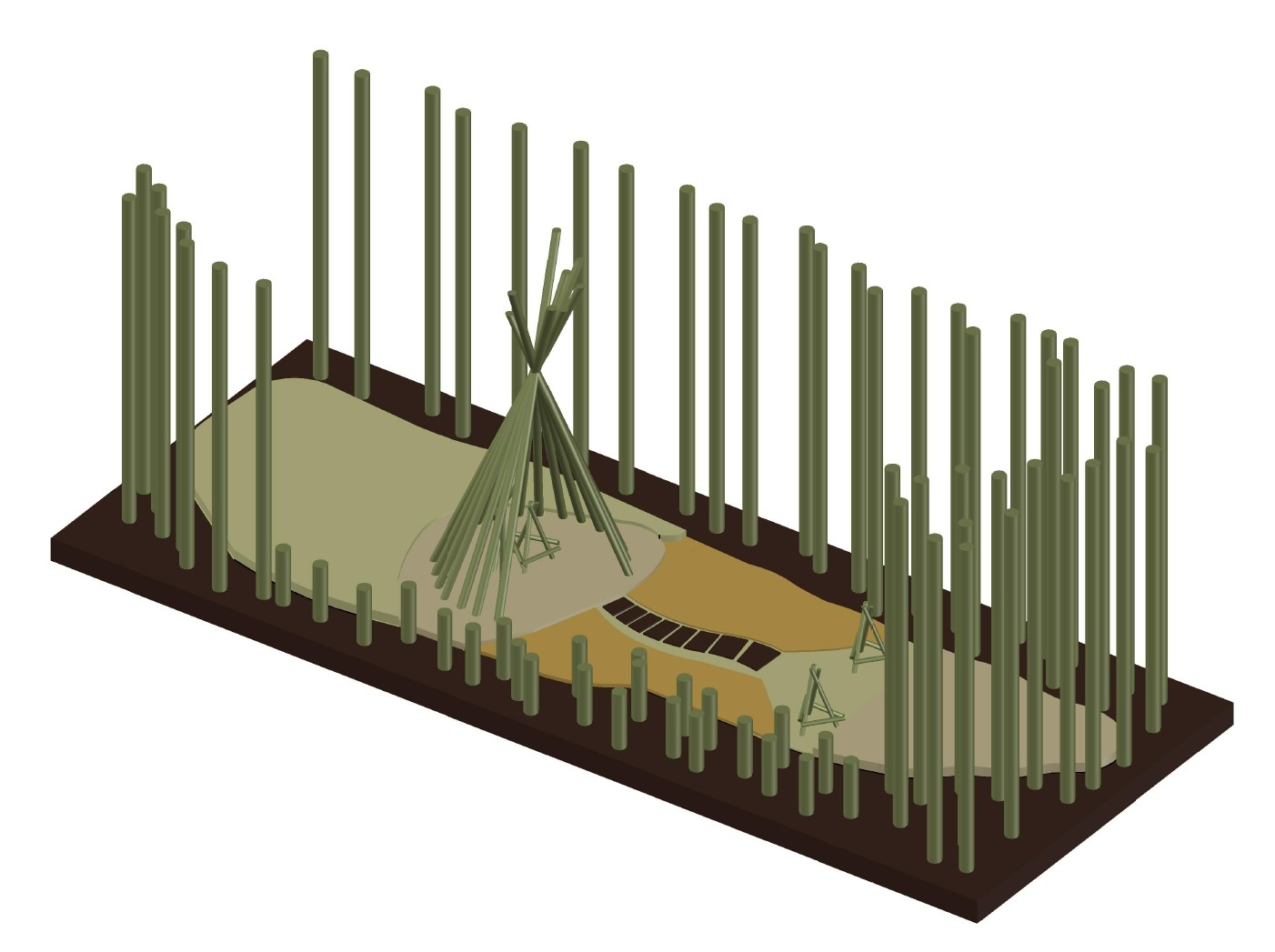
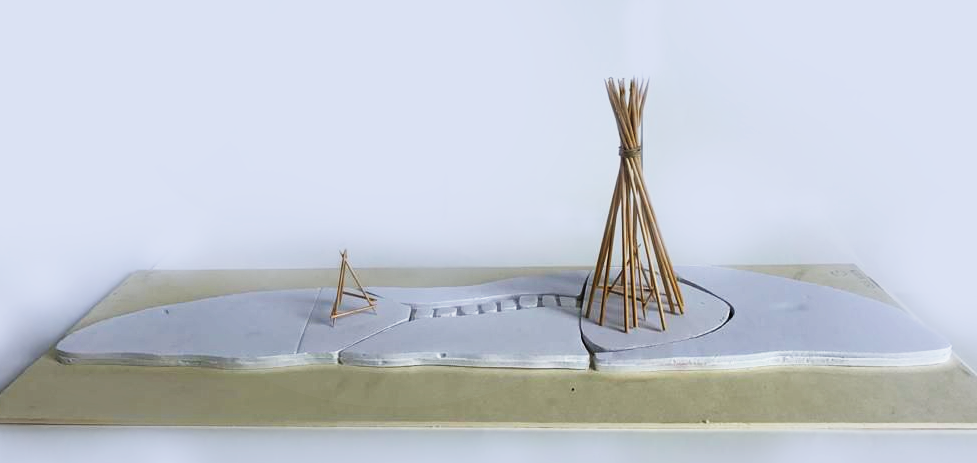
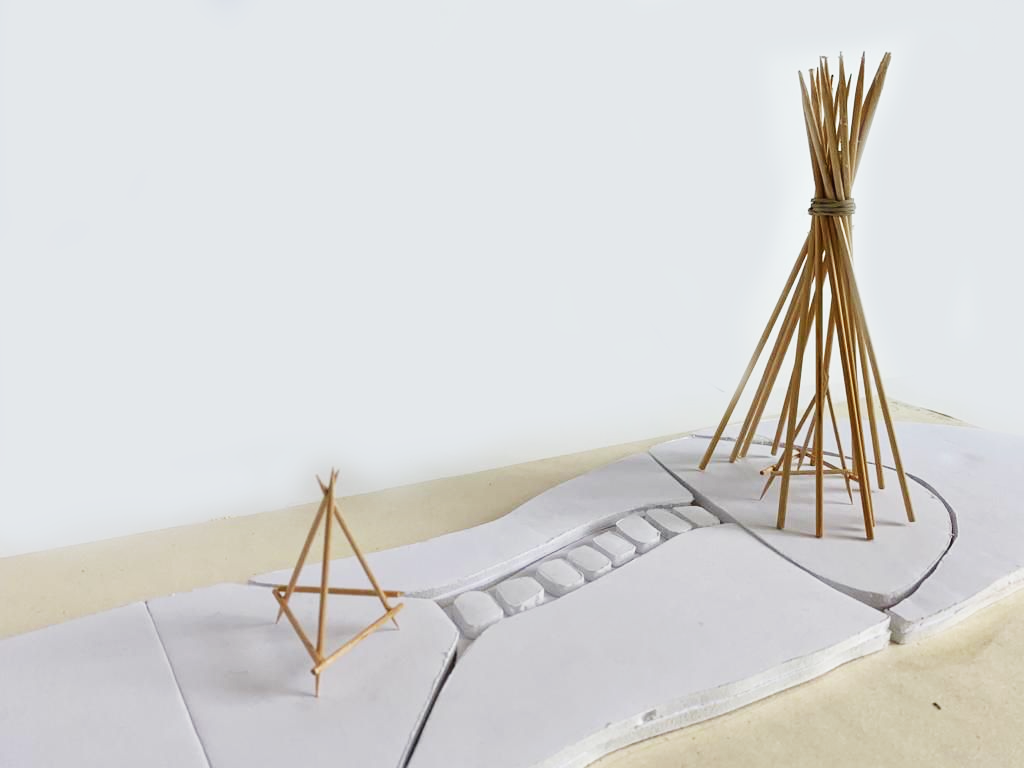
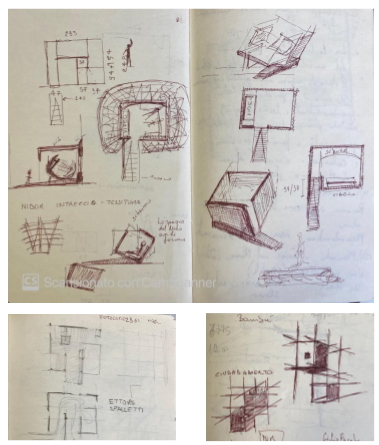
We decided to create this installation on the model of the primitive Hut, taken from Eugène Viollet-le-Duc’s Histoire de l’Habitation Humaine, 1875.
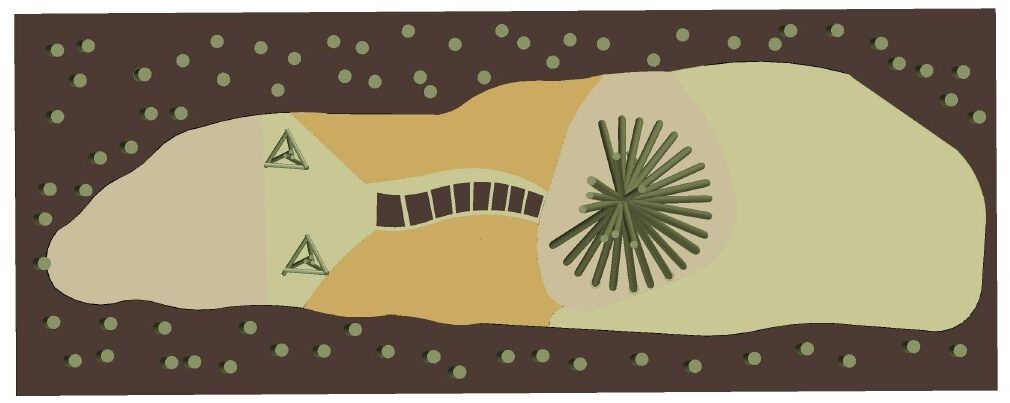
This hut is intended to represent the archetype of the primitive house, consisting only of the essential elements (a base, outer walls and a roof). Its objective is to show the coexistence between man and animal: inside it can live the man and above it the birds can build their nest.
From the small bamboo grove that is located near the building we thought of eliminating the indoor plants, therefore leaving only a small perimeter of plants, and using them for the realization of this installation and the “nest” inside. The path leading to the hut has the shape of a thorn of an animal.

STUDY OF THE INTERNAL INSTALLATION “NIDO”

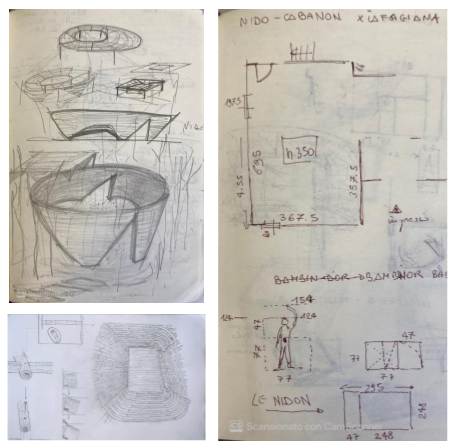
As a reference we took the Bacchette Nest of Tadashi Kawamata and the Nest of Gianluca Vassallo. From the bamboo carved from the outside, we also created an internal nest, modelled on Le Corbusier’s Cabanon.
This hNido is a sort of ephemeral architecture in motion that intervenes in the urban space as a foreign and new body, inviting anyone to enter. The nest allows you to be at the center of a multi-directional and immersive sound environment whose visitors are enveloped by the sound of local animals. The goal is a unique experience of redundancy between sound material and amplification medium.

STUDY OF THE INTERNAL INSTALLATION “TABLE”

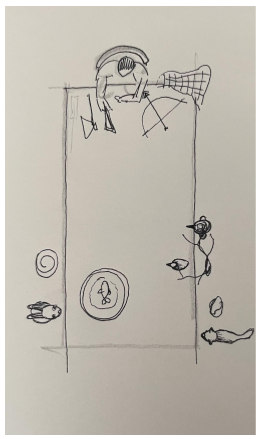
For this installation we took inspiration from this table at the Biennale d’Architettura 2021, whose theme was How will we live together?. This installation represents a table not for humans, but adapted for the various animal species. They have appropriated the extinct lifestyle of man.
Architecture, like other artistic expressions, finds its raison d’être precisely in the deep bond it has with life and society; through creative synthesis it is capable of representing all aspects of human life.
In our version, animals are separated from man by weapons that he himself uses to kill them; these symbolize man’s cutlery. The latter is not able to live with animals, and his actions, and in particular his homes, now determine the life of animals, submissive.